Babe Ruth
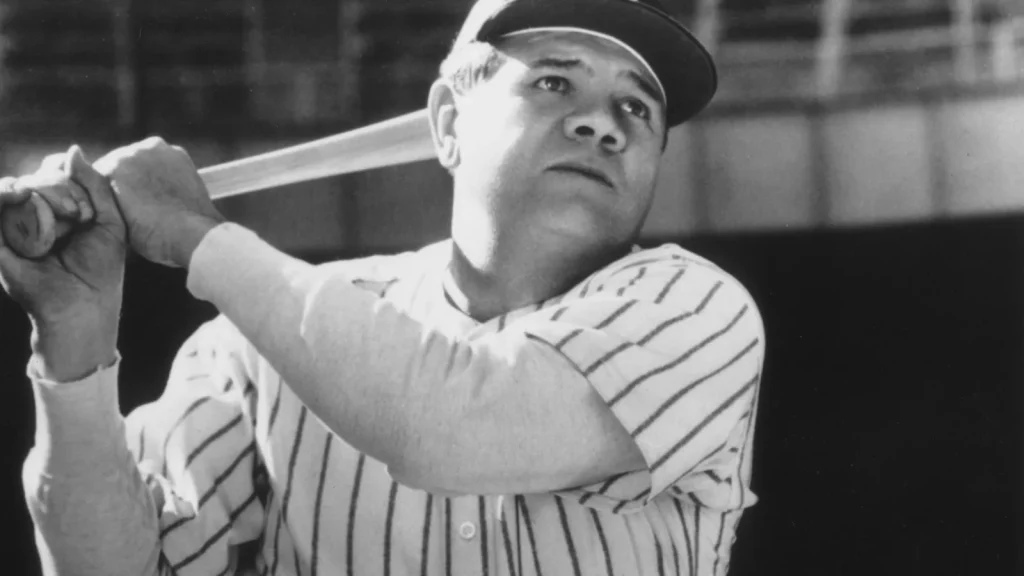
To comprehend Babe Ruth’s excellence, one must understand his time. Born in 1895, Ruth began his career as a pitcher in 1914 with the Red Sox. His remarkable batting career began in 1920 when he was moved to the Yankees. At the plate, the “Sultan of Swat” symbolized force and accuracy.
Ruth’s renown stems from his home runs. In the 1920s, he hit home runs at an unprecedented rate, changing the game. His record-setting 60-home run season in 1927 remained for 34 years. He led the league in home runs 12 times. Ruth’s style, not simply his home runs, sets him distinct. His swing was beautiful, mixing force and precision, almost scientific. He batted for power to all fields and blasted breathtaking home rockets past the outfield railings.
Ruth’s baserunning was as impressive as her home runs. His career batting average was.342, on-base percentage.474, and slugging percentage.690. These figures are astounding, especially considering Ruth played in a pitching-dominated era. He knew the striking zone and used counts to his advantage. His power and patience made opposing pitchers miserable.
Ruth affected the game beyond statistics. Fans flocked to the ballpark for his charm. He symbolized optimism and excitement amid the Great Depression. Fans rushed to see him play, and his impact went beyond sports. He is one of sports’ most famous people and helped make baseball America’s passion.
His adaptability solidifies Ruth’s standing as the greatest hitter. Complete hitter, not just a power batter. He possessed good baserunning speed and batted for average and power early in his career. His versatility made him an asset to his club. Ruth could hit a clutch home run, single, or bunt.
Despite many outstanding hitters, Babe Ruth had the most power, average, and effect. Baseball players are still inspired by his decades-old records. He was more than a slugger—he was a baseball mechanic, tactician, and artist.
Ted Williams

Ted Williams was born in San Diego on August 30, 1918. He had a natural talent for hitting baseballs from an early age. He became the finest hitter in sports history via perseverance, devotion, and an insatiable enthusiasm for the game.
Williams’ hitting consistency was unrivaled. His 19-year Boston Red Sox lifetime hitting average was.344. This continuous performance is unprecedented in baseball history. He was the last player to bat over.400 in a season, hitting.406 in 1941.
Williams batted singles but had great power. Despite missing many seasons due to World War II and the Korean War, he hit 521 home runs. His talent and game knowledge allow him to combine a high batting average with enormous power.
Williams’ plate vision was one of his greatest strengths. He was able to distinguish balls from strikes, and his.482 lifetime on-base percentage shows his discipline and patience. In his career, he topped the league in on-base percentage 12 times.
Williams’ 1941 quest for a.400 hitting average was legendary. He had to decide whether to participate in the last doubleheader to protect his average or risk it. Williams elected to participate and went 6-for-8 in the two games, finishing with a historic.406 average. This decision showed his dedication to the game and team.
Williams influenced the game beyond his individual achievements. He was a hitting student who studied pitchers and taught others. Williams’ book, “The Science of Hitting,” is a bible for aspiring batters, and his lessons still impact them.
Despite his personal success, Williams never won a World Series. This does not lessen his standing as the greatest hitter. His excellence is shown by his impact on the game, his influence on future players, and his peer regard.
Ted Williams lives on in baseball fans’ hearts and records. He is a baseball legend for his classic swing, passion to hitting, and love of the game. The Ted Williams Museum and Hitters Hall of Fame honor his incredible career and encourage future baseball fans.
Ty Cobb

Ty Cobb, a baseball icon, was born in Narrows, Georgia, on December 18, 1886. He spent hours practicing and studying the game to improve his hitting. Cobb stood out from his peers due to his physical ability, work ethic, and dedication to perfection.
Cobb’s 24 seasons in MLB from 1905 through 1928 were remarkable. Over these years, he constantly performed well at the plate. His lifetime batting average of.366 remains a record, demonstrating his hit-making skill. Having unusual hand-eye coordination, bat speed, and pitch selection skills allowed him to hit for a high average.
Cobb’s versatility was a hallmark of his hitting. Power and finesse pitchers were equally comfortable with him. He adjusted his approach at the plate depending on the situation. Cobb was adept at bunting for a base hit, line driving, and sacrifice flies. His flexibility made him a headache for pitchers and a baserunner danger.
Cobb mastered stealing bases as well as getting on base. His aggressive baserunning allowed him to steal 897 bases in his career, a record for nearly 50 years. His baseball IQ allowed him to read pitchers and time base steals.
Ty Cobb was distinguished by his fierce competitiveness. His love for the game was called “killer instinct.” He treated every at-bat like a war and wanted to win. His tireless work ethic encouraged teammates and frightened opponents. Cobb’s hitting prowess was as much due to his passion as his physical talents.
Cobb’s legendary career has controversies. He was renowned as a vicious opponent due to his aggressive and occasionally violent playing style. However, this same drive and determination to win made him the greatest hitter ever. He never accepted mediocrity and strived for excellence for himself and his team.
Lou Gehrig

Gehrig’s hitting career was amazing. His unmatched consistency at the plate and clutch performance made him an invaluable Yankees asset throughout his career. He stood out for his force, accuracy, and patience.
Gehrig hit with incredible power. His ability to hit the ball well into the outfield earned him 493 home runs. His strong build and inherent strength allowed him to consistently hit baseballs over the outfield fences. Gehrig’s power hitting was constant throughout his career, making him a feared batter’s box presence.
Gehrig’s consistency set him apart from his peers. His lifetime hitting average of.340 ranks him among baseball’s best. His 2,130-game run, which lasted decades, showed his incredible tenacity at the plate. Gehrig’s hitting power allowed him to perform so well over time.
Gehrig struck with patience and discipline. He regularly drew many walks due to his acute plate eye. He was patient enough to wait for the proper pitch and capitalize on opposition pitchers’ mistakes. Gehrig was hard to retire because he could work the count and wait for his pitch. He could penalize pitchers for gaps in focus, so they had to be on their game.
Gehrig’s performance under pressure cemented his status as a great hitter. His colleagues and fans trusted and admired him for his clutch performances. He excelled in World Series games, where pressure was maximum. Gehrig’s clutch hits and ability to rise to the situation cemented his legend.
Hank Aaron

Consistency is key when analyzing Hank Aaron’s hitting ability. Aaron played at an incredible level during his 23-year MLB career. This steadiness helped him reach 3,771 hits, fourth on the all-time hits list. His unmatched batting talents allow him to hit the ball year after year.
Aaron could power hit as well as get on base. For nearly 30 years, his 755 career home runs were the record. Aaron did this without the public attention Babe Ruth and Barry Bonds received, which is extraordinary. He used his smooth, compact swing to produce power, but he always hit well overall.
It was remarkable how Hank Aaron’s batting changed with the game. He changed his method as he aged, showing a great grasp of hitting. Aaron was a complete offensive force because he could hit for average and power. His 1957 National League MVP award shows his all-around hitting skills.
Aaron’s pursuit of Babe Ruth’s home run record may be his greatest accomplishment. Aaron became a baseball legend in 1974 when he eclipsed Ruth’s mark in front of the world. Despite enormous pressure and criticism, Aaron’s attention and dedication to his trade were on full show. It showed his mental toughness and striking skills.
Aaron’s accomplishments went beyond the regular season. His postseason performance was consistently strong. He hit.362 with six home runs in 17 playoff series, showing his character in big moments. His career highlight was winning the 1957 World Series with the Milwaukee Braves.
Aaron’s hitting stats are remarkable, but not all-encompassing. He influenced the game beyond the diamond. Aaron’s calm dignity and resilient spirit inspired generations of sportsmen as a pioneer for African American players in a racially volatile age. He transcended baseball as a symbol of optimism and endurance.
Hank Aaron’s legacy honors baseball’s beauty and elegance. His beautiful swing, flawless timing, and unflinching consistency inspired generations of batters. He was more than a baseball player—he was a maestro at the plate, leading a string of hits that will forever be remembered.
Stan Musial

After being born in Donora, Pennsylvania, on November 21, 1920, Stan Musial became a baseball great. His modest upbringing instilled a work ethic and tenacity that will serve him throughout his career.
Musial’s 22-season career with the St. Louis Cardinals from 1941 through 1963 showed his exquisite and powerful hitting. Musial was great because of his consistency. Finished his career with 3,630 hits and a.331 batting average. His remarkable 17 seasons above.300, including seven over.350, demonstrate his consistency at the plate. Sustained brilliance is a tribute to his unmatched striking.
Musial’s versatility was one of his greatest accomplishments. His flexibility allowed him to hit average and power. He hit 475 homers and drove in 1,951. Musial has 1,599 career walks and 696 strikeouts because to his plate discipline and strike zone awareness. This combination of power, contact, and discipline is unmatched in baseball history.
Musial has amazing accolades and statistics. 24-time All-Star, three-time National League MVP, and seven-time hitting champion. He won the 1948 Triple Crown by leading the league in batting average, home runs, and runs batted in, cementing his legacy. Musial also led the Cardinals to three World Series titles in 1942, 1944, and 1946, cementing his status as a clutch player.
Stan Musial was adored by fans and regarded by colleagues beyond stats and honors. His friendliness earned him the moniker “The Man” and won over generations of baseball fans. Sportsmanship and honesty made Musial a beloved baseball icon and an example for future players.
Musial’s influence lasted beyond his playing career. He remained engaged in baseball, mentoring and inspiring many players and prospective sportsmen. His charity and community involvement made him a cherished American icon.
Mickey Mantle

Mickey Mantle was born in Spavinaw, Oklahoma, on October 20, 1931. He was a promising switch-hitter, setting him apart from his peers. Mantle’s ability to bat from both sides of the plate let him adjust to different pitchers and schemes.
The Yankees signed Mantle in 1951, starting his career. The departing Joe DiMaggio had huge shoes to fill, thrusting him into the spotlight. Exceptionally, Mantle surpassed expectations. His batting skills started strong and developed with time.
Mantle’s power was astounding. He had a knack for hitting baseballs out of the park. Mantle was a league leader in home runs during his career. His record 565 home runs and 1956 Triple Crown season made him an offensive powerhouse.
Power hitting was outstanding, but Mantle’s overall hitting talents were too. His.298 lifetime batting average shows he can hit the ball regularly. His 2,415 hits and 1,509 walks demonstrate his plate discipline. Mantle’s good eye helped him to draw many walks, vexing pitchers and improving his on-base percentage.
Perhaps Mantle’s greatest achievement was his consistency in hitting for power and average. He was a five-tool player who could hit for average, power, and everything in between. He was unstoppable at the plate due to his speed, strength, and skill.
Mantle’s pressure-handling sealed his standing as the greatest hitter. He delivered when his team needed him. Legendary World Series efforts earned him seven championship rings and three MVP honors. Mantle hit.257 home runs in the postseason, showing his finest performance under pressure.
While Mantle’s hitting stats are remarkable, they only tell half of the tale. He affected the game beyond the box score. The hard ethic and commitment of Mantle inspired many young baseball players, and his legacy lives on today.
Mickey Mantle faced obstacles. His legs were troubled by injuries throughout his playing career, reducing his athletic talents. Mantle adjusted and contributed to his team despite these obstacles.
Mantle was properly elected into the Baseball Hall of Fame in 1969, cementing his status as a great hitter. His legacy in baseball is his batting prowess.
Rogers Hornsby

Early 20th-century baseball prodigy Rogers Hornsby was born in 1896. He was known for his uncanny ability to hit the ball, but his eye for hitting put him apart. Hornsby won two Triple Crowns and has the second-highest career batting average in MLB history,.358. This outstanding statistic shows his continuous plate performance.
In 1924, Hornsby hit.424 for the St. Louis Cardinals, a remarkable performance. He had the highest single-season batting average in modern history, demonstrating his skill and determination. Hornsby’s power and average were unmatched in his day, and he hit 301 home runs in his career, an astounding figure given his dead-ball start.
His strike zone knowledge sets Hornsby apart from other great batters. He knew pitchers’ tendencies like the back of his hand and knew which pitches to swing at. Even though the focus was on putting the ball in play, he drew 103 walks in 1922 because to this expertise. His career on-base percentage of.434 showed his great batting eye and ability to hit and get on base.
Hornsby’s hitting wasn’t limited to the regular season. He handled pressure well in the postseason, batting.330 in 12 World Series games. Famous World Series performances cement his status as a clutch hitter, crucial for the finest hitter of all time.
Versatility distinguishes Hornsby. He mostly played second base and shortstop, but sometimes third base and the outfield. This versatility and willingness to play numerous defensive roles make him an asset to any club.
After his on-field success, Hornsby’s devotion to his profession was renowned. He was recognized for his dedication to hitting practice. His obsession with perfection showed his passion of the game and drive to win.
Hornsby was the greatest hitter ever, despite his faults and moral issues. His unequaled consistency, numbers, and pitcher reading put him in a league of his own. Rogers Hornsby may not be as famous as Babe Ruth or Ted Williams, but he is a baseball icon for hitting. His history shows that baseball excellence can take numerous forms, and Rogers Hornsby was the sport’s finest hitter.
Barry Bonds

Barry Bonds frequently tops lists of baseball’s greatest hitters. Bonds’ baseball skills are undisputed, even though he was the most controversial person in sports history owing to performance-enhancing drug claims. His numbers and exploits prove he was the greatest hitter ever.
Bonds became baseball’s finest hitter with natural talent and unmatched work ethic. His early success was predetermined when he was born in Riverside, California, on July 24, 1964. Bobby Bonds, his father, was a Major League outfielder, and Reggie Jackson was his cousin. Baseball was Barry Bonds’ blood.
Bonds stood out from his teammates upon entering the field with his exceptional talents. His exquisite swing created great bat speed with a smooth, forceful stroke. His incredible hand-eye coordination allowed him to hit even the most difficult deliveries. Bonds’ strike zone knowledge, uncommon ability to distinguish balls from strikes, and disciplined approach allowed him to draw walks at an alarming rate.
Bonds achieved an incredible amount over his career. The all-time home run leader, he surpassed Hank Aaron with 762. Bonds’ 2001 season record of 73 home runs holds. He earned respect from opposing pitchers with 2,558 career walks, including 688 deliberate walks. Bonds was a seven-time National League MVP due to his consistency and power at the plate.
Bonds’ ability to adapt and grow during his career puts him apart from other hitters, including Ted Williams and Babe Ruth. He was a five-tool player and power hitter. Bonds stole 514 bases and earned eight Gold Glove Awards for his outfield fielding. His varied skills made him a complete hitter.
Despite his success, Bonds’ career remains controversial. His accomplishments are overshadowed by performance-enhancing drug accusations. His suspicions persist despite his never failing a drug test. Some say this tarnishes his legacy and disqualifies him as the greatest hitter. Bonds wasn’t the only player of his era accused of such things, and he was never punished or expelled from the sport.
The era in which Bonds played is vital to his baseball legacy. The “Steroid Era” saw several players gain unparalleled power and performance, making it a complicated and contentious period in sports history. Despite the charges against Bonds, his talent and effect on the game remain unaffected.
Willie Mays

To understand why Mays is considered the finest hitter ever, one must examine his statistics and accomplishments. Over two decades, he played for the New York/San Francisco Giants and briefly the Mets. His impressive stats include 660 home runs, 3,283 hits, and a.302 lifetime batting average. These figures would have secured his place among the greats, but his method sets him distinct.
Mays was unmatched in power, speed, and batting eye. His smooth, precise swing was beautiful. He could hit the ball to all fields, making it difficult for pitchers to pinpoint a vulnerability. His 660 home runs, second only to Babe Ruth at retirement, showed his power. In addition, Mays hit for average and power, an uncommon achievement in baseball.
His ability to adjust was a hallmark of Mays’ hitting. He studied opposing pitchers and adjusted his strategy. In an era when pitchers dominated hitters with breaking balls and off-speed offerings, his flexibility helped him succeed. Mays’ baseball IQ and unequaled skills allow him to adapt and flourish in numerous scenarios.
Mays’ effect on the game went beyond his own accomplishments. He constantly worked for his team and did everything it necessary to win. His baserunning skills enhanced his offense. Mays stole 338 bases in his career, frequently when his team needed motivation. His baserunning speed forced opposing defenses to make mistakes and created opportunities for his teammates.
He was consistent, which may be his greatest legacy as a hitter. He has 17 seasons with 20+ home runs and 13 with 100+ RBIs. He consistently produced at an outstanding level despite his obstacles, as seen by these stats.
Willie Mays was appreciated in baseball beyond his stats. His personality and love for the game won over fans and teammates. He played with irrepressible excitement and energy, and his effect went beyond the diamond.
Joe DiMaggio

Joe DiMaggio, born Giuseppe Paolo DiMaggio on November 25, 1914, in Martinez, California, had humble origins but an incredible baseball career. DiMaggio had a natural talent to hit the ball from the minute he entered the field. His swing was fluid, his strike zone sight was amazing, and his timing was perfect.
DiMaggio’s landmark 56-game hitting streak in July 1941 is one of his most notable achievements. This record is one of baseball’s most unbreakable. DiMaggio was uncanny at the bat in 56 games. He connected with fastballs, curveballs, and sliders like no other. DiMaggio remained a mystery to pitchers around the league, but he was unstoppable in the batter’s box.
The DiMaggio hitting streak was not his only strength. His lifetime batting average of.325 solidifies his status as the greatest hitter. The method DiMaggio used used his stats made him special, not just the numbers. His graceful swing was powerful and accurate. He could “hit a line drive off a ball pitched in the dark,” demonstrating exceptional hand-eye coordination.
DiMaggio stood out for his clutch hitting and average batting. He was a clutch hitter who excelled under pressure. DiMaggio always rose to the occasion, whether it was a crucial postseason game or a regular-season at-bat. His composure and assurance at the plate made him a reliable player for teammates and fans in crucial moments.
DiMaggio had a 579 slugging percentage and 398 on-base percentage in addition to his batting average. These stats demonstrate his power and ball contact. Besides singles, he could bat for extra bases and home homers.
DiMaggio helped the Yankees’ 1930s and 1940s dynasty beyond his own achievements. His performances in the Fall Classics were crucial to the team’s nine World Series titles. DiMaggio was the Yankees’ face throughout their most successful era due to his batting and leadership off the field.
Tris Speaker

Early baseball prodigy Tris Speaker was born in Hubbard, Texas, on April 4, 1888. His incredible rise from a little Texan hamlet to baseball stardom is a tribute to his hitting skills. Speaker’s steady and precise baseball contact propelled him to fame in the early 20th century.
One of Speaker’s best hitting skills was pitch recognition. He was adept at reading pitchers and anticipating pitches. He could miss poor pitches and hit good ones with this special talent. Speaker’s plate discipline made him a formidable attacking weapon.
Speaker’s batting average was his strength. His.345 lifetime batting average showed his consistency and ability to get on base over 22 years. Speaker’s batting average was the result of his consistent performance. He topped the AL in hitting average eight times, demonstrating his consistency.
Speaking was noted for his power at the plate and average hitting. Speaker’s ability to identify outfield gaps and drive the ball to all fields made him an extra-base hit machine. He still holds the record with 792 doubles, demonstrating his ability to identify defense holes.
Tris Speaker’s plate discipline is essential to his hitting ability. Speaker was known for drawing walks, which increased his on-base percentage and placed pressure on pitchers. He took 1,529 walks in his career, a testament to his baseball IQ and strategy.
The speaker influenced the game beyond his individual achievements. He was a baseball scholar, studying the game and using his expertise to get an edge. Baseball players revered him for his leadership on and off the field and sought his advice on hitting and fielding.
Frank Robinson

Robinson played 21 seasons in Major League Baseball from 1956 through 1976, demonstrating his batting power. Born in Beaumont, Texas, on August 31, 1935, he stood out for his innate skill and hard ethic. Robinson was the finest hitter of all time because of his intangible characteristics and excellent numbers.
Robinson was known for his power as a batter. His home run totals show his ability to hit the ball hard to all fields. He hit 586 home runs in his career, placing him among baseball’s greatest sluggers. Robinson was a problem for pitchers because he had constant and unrelenting power, not just big moonshots.
Beyond the metrics, Robinson is the greatest hitter ever because of his clutch play. He usually delivered when his team needed him. Robinson thrived under pressure, whether it was a key at-bat in a tight game or heavy postseason duress. His calmness and assurance made him the guy teammates and fans wanted at the bat when it mattered most.
Robinson’s hitting was both powerful and consistent. His lifetime batting average of.294 showed his ability to hit and get on base. Over 2,900 hits in his career made him one of the most dependable batters ever.
Another strength of Robinson’s batting was plate discipline. He was adept at avoiding poor pitches and work counts. This technique helped him draw walks and capitalize on pitchers’ mistakes when they challenged him. Robinson’s power, consistency, and plate discipline made him a triple threat at the plate, putting opposition pitchers in danger.
Robinson influenced the game beyond his individual accomplishments. He led on and off the field, garnering the respect of his teammates, coaches, and opponents. His passion to the game and excellence inspired future baseball players.
Albert Pujols

Pujols’ power, contact, and plate discipline set him apart. He has continually delivered when it mattered during his distinguished career. He has almost 600 home runs and a lifetime batting average of.300. These figures show his extraordinary consistency over two decades in the majors.
Pujols’s hitting skills go beyond power. He has a knack for hitting the ball, which has helped him accumulate many hits and RBIs. Many envy his strikeout-to-walk ratio, which shows his discipline and strike zone awareness. Pujols’s plate discipline and extended counts have kept him among the league’s top on-base percentage players, establishing his position as the finest hitter ever.
One cannot appreciate Albert Pujols without highlighting his phenomenal consistency. Since the beginning, Pujols has been consistent, unlike many other batters. He routinely ranks among the league leaders in offensive categories. His work ethic and devotion to his art allowed him to sustain this level of proficiency throughout his career.
Adaptability is another strength of Pujols’ batting. To stay current and productive, Pujols has changed his approach as baseball has developed. His ability to adapt to changing times has reflected in his swing, plate discipline, and power hitting. This versatility has allowed him to dominate the game even as he aged, making him the finest hitter ever.
Beyond statistics, Albert Pujols’s leadership and sportsmanship affect the game. He has inspired several young players to learn about humility, hard effort, and striking technique. Pujols’s community and humanitarian work show his integrity and determination to make a difference on and off the field.
Mel Ott

Babe Ruth, Ted Williams, and Hank Aaron are considered baseball’s best hitters. Mel Ott is sometimes neglected but deserves a major place in this exceptional group. Ott became one of the greatest hitters from 1926 until 1947.
Mel Ott’s Giants career, mostly as an outfielder but sometimes as a third baseman and first baseman, was exceptional. His trademark corkscrew batting posture symbolized his unique hitting style. Ott, at 5 feet 9 inches and 170 pounds, was not the largest or strongest player on the field, but he had a knack for power and contact.
Ott was distinguished as a hitter by his plate discipline and baseball IQ. His pitch-reading skills helped him draw a staggering amount of walks. He led the National League in walks six times and had a.414 lifetime on-base percentage. He often threatened opposition pitchers with his ability to manipulate counts and wait for the ideal pitch to drive.
Ott’s bat skills went beyond walks and on-base percentage. His home run totals show his power. His 22-year career included 511 home runs, which was amazing given his period. Live-ball has replaced dead-ball, and power batters were favored. Ott routinely led the league in home runs in this new context.
Ott was a terrific hitter due of his consistency. He had 100+ RBIs in 10 seasons and 100+ runs in 13. His expertise and passion to his profession allowed him to produce for 20 years. He anchored the Giants’ lineup with dependability.
The fact that Mel Ott played his whole career with the New York Giants makes his hitting even more astounding. In an age when players routinely switched teams, Ott’s Giants allegiance showed his dedication to the game and his hometown. He led the team as captain and set an example off the field as well as in the batter’s box.
Ott’s effect on the game went beyond playing. His baseball career included managing and radio broadcasting after retirement. Fans loved him for his gaming knowledge and affection, cementing his status as a great.
In 1951, Mel Ott was elected into the Baseball Hall of Fame, the greatest honor. It was a fitting tribute to a guy whose extraordinary hitting and unshakable passion to the game had shaped the sport.
Jimmie Foxx

Jimmie Foxx, born in Sudlersville, Maryland, in 1907, became a formidable hitter in the 1920s. Foxx, known as “Double X” for his tremendous swing, was a strong right-handed batter with a great eye for the strike zone. He debuted in the Majors with the Philadelphia Athletics aged 17 in 1925 and left an unforgettable imprint.
Foxx’s strength was astounding. He set a record with 534 home runs in 20 years. Foxx’s ability to hit baseballs into the seats was remarkable in an era when the long ball was rare. His raw power and crisp, compact swing made him a unique dual threat who hit for average and power.
Foxx’s on-base skills matched his power. He retired with a.325 batting average and.428 on-base percentage. He was equally adept at hitting for average, power, and walks. His well-rounded hitting made opposition pitchers unsure how to approach him.
Foxx’s 1.038 OPS (On-Base Plus Slugging) is a highlight of his batting. In baseball history, just a few batters have maintained an OPS above 1.000. Foxx accomplished this unusual milestone with ease, demonstrating his attacking prowess.
Following the season, Foxx’s legacy continues. In the postseason, he helped the Philadelphia Athletics win three World Series victories from 1929 to 1931. His clutch hitting and grand stage performance reinforce his claim as the greatest hitter.
Statistics and records can show Jimmie Foxx’s excellence, but they don’t cover his effect on the game. Pitchers feared him in the batter’s box, and his work ethic and devotion to his trade inspired future players.
Tony Gwynn

Beginning in modest Long Beach, California, Gwynn became a baseball legend. His inherent knack for striking was evident from birth on May 9, 1960. By 1982, he had made his San Diego Padres debut after a quick minor league career. The baseball world was unaware of a batting legend’s ascension.
Gwynn was a master hitter who made perfect contact with the ball. He consistently had a batting average above.300, a measure of greatness in the sport. Gwynn’s.338 lifetime batting average is among MLB’s best. He’s the best hitter ever since he consistently hits the ball well.
Gwynn’s hitting was more than just a great average. He was an expert hitter who could hit the ball to all fields. Gwynn could read pitchers’ fastballs, curveballs, and changeups and adapt his swing. He was unbeatable because to his adaptability and hand-eye coordination.
Gwynn’s resilience was one of his greatest strengths as a hitter. He faced legendary pitchers like Greg Maddux, Randy Johnson, and Pedro Martinez. Gwynn routinely got on base and scored runs for his side. His clutch hitting won over fans and colleagues.
Gwynn’s enthusiasm for the game showed in every swing, not just statistics. He meticulously studied pitchers and their patterns before each at-bat. He was dedicated to his trade, spending hours in the batting cage improving his swing. Gwynn’s passion to hitting inspired future baseball players.
Beyond the field, Gwynn had an influence. He was liked in San Diego, where he played his whole 20-year Padres career. His dedication to the squad and city earned him the nickname “Mr. Padre.” Humble and passionate about baseball, Gwynn was a role model for young players and a renowned ambassador.
He was a 15-time All-Star, 5-time Gold Glove winner, and 7-time Silver Slugger winner in addition to hitting. The Baseball Hall of Fame enshrined him in 2007, with 97.6% of the vote, confirming his standing as the greatest hitter ever.
Salivary gland cancer killed Tony Gwynn at 54 in 2014. Baseball lost him, but his reputation as the greatest hitter continues on. Gwynn’s influence, passion, and love of baseball inspire generations of players and fans. Tony Gwynn will always be a batting legend.
Ichiro Suzuki

Ichiro Suzuki, known as “Ichiro,” is a baseball icon revered for his hitting. Born in Kasugai, Aichi, Japan, on October 22, 1973, Ichiro’s rise to baseball legend is amazing. Ichiro’s effect on baseball is unquestionable, from his early days in Nippon Professional Baseball (NPB) through his momentous move to MLB.
His unique hitting style and excellent career statistics make Ichiro the top hitter of all time. Zen-like focus, hand-eye synchronization, and quickness characterized his batting approach. Ichiro was unmatched at hitting for average and placing the ball where the fielders weren’t.
Ichiro became a star with the Orix BlueWave in the NPB. He won seven straight batting titles and established a record with 210 hits in 1994. His excellent baseball contact in Japan was evident. His 2001 signing with the Seattle Mariners propelled him worldwide.
Ichiro’s MLB debut was amazing. He became only the second player in MLB history to win both the AL Rookie of the Year and AL MVP awards in the same season. His hitting consistency allowed him to score over 200 hits in each of his first 10 MLB seasons, a feat no other player has achieved.
One of Ichiro’s greatest strengths as a hitter was adaptability. He could read pitchers and modify his approach. Ichiro could slap hit, bunt for a base hit, or drive the ball to the opposite field. He could leg out infield singles and extend ordinary singles into doubles with his speed and technique.
In addition to his batting, Ichiro’s work ethic and dedication to his profession benefited the game. He had a strict pre-game regimen and was diligent. His physical fitness and preparedness inspired colleagues and fans.
Ichiro’s influence went beyond baseball. He promoted the sport worldwide, especially in Japan, where he is still revered. He united individuals from different cultures via baseball off the field.
As we look back at Ichiro Suzuki’s career, his talents, consistency, flexibility, and work ethic make him the finest batter ever. His 3,089 MLB hits and NPB hits make him one of the game’s most productive batters. However, his game performance made him remarkable, not just his stats.
Ichiro Suzuki’s effect on baseball transcends numbers. His legacy redefined hitting and inspired generations of players to thrive. Ichiro Suzuki deserves to be considered the finest hitter of all time for these and other reasons, a real batter’s box master whose legacy will live on in baseball history.
Eddie Collins

Eddie Collins is typically overlooked when debating baseball’s best hitters, unlike Babe Ruth, Ted Williams, or Ty Cobb. Collins is considered one of the finest hitters ever by those who understand the game. From 1906 through 1930, he set several records and achieved greatness as a hitter.
Eddie Collins is the greatest hitter ever due to his consistency and flexibility at the plate, as well as his career numbers. Collins’ ability to adjust to shifting game conditions allowed him to hit above.300 for 18 seasons in his 25-year career. One of baseball’s highest lifetime batting averages,.333, shows his tremendous hitting skills.
Collins’ ability to get on base defined his hitting. His career OBP of.424 is remarkable. He often led the American League in walks because he recognized the significance of both making contact and drawing walks. His sharp eye and disciplined plate approach gave him a consistent danger to pitchers.
Collins was a double danger due to his basepath quickness. He routinely reached base and stole bases. He led the AL in stolen bases four times and completed his career with 741 thefts, a record for decades. His quickness and hitting made him a basepath nightmare for opposing teams.
Collins’ game didn’t revolve around home runs, but his age was very different from today’s power-driven game. Collins batted for average and found defensive gaps instead of going for the fences. The hit-and-run specialist used his bat control to put the ball in play and advance runners. His prowess as a batter is shown by his ability to perform situational hitting and prioritize team needs before personal statistics.
Collins excelled at vital occasions. He won four World Series with the Philadelphia Athletics and Chicago White Sox. In these crucial moments, he provided critical hits and played great defense, making him one of the most reliable and useful players in playoff history.
Eddie Collins was a clubhouse leader and professional beyond his on-field accomplishments. He was a great baseball ambassador, respected by his colleagues and setting an example for future players. Every budding hitter should emulate his work ethic, passion, and love of the sport.
Roberto Clemente

Clemente became the greatest hitter with determination, skill, and a unique technique. Born in Puerto Rico in 1934, he endured several obstacles to MLB. Clemente’s prowess was clear from the time he walked on the field, and he quickly became a hitter.
Clemente’s unique skills made him a standout batter. He was strong like a Ruth or Aaron, sharp like a Williams, and graceful like a ballet dancer in the batter’s box. His swing was beautiful, smooth, and powerful. Clemente’s all-field hitting made pitchers miserable. He could easily go deep left, right, or center, surprising defenses.
Clemente was the greatest hitter not merely because of his physical abilities. His cerebral approach to the game distinguished him. He regularly studied pitchers, strike zone details, and hitting techniques. Clemente read pitchers and predicted their moves expertly. He could spot pitches early and adapt his swing, making him practically unbeatable.
The consistency of Clemente’s hitting was astounding. He averaged.300 or higher year following year. He had four batting crowns and a.317 career average. Clemente’s plate consistency showed his passion and work ethic. He focused on every pitch and never took a pitch off.
Clemente affected the game beyond the box score. He led his teammates on and off the field with his hard ethic and sportsmanship. His community service and platform utilization were noteworthy. He died in an aircraft accident while helping Nicaraguan earthquake victims, cementing his status as a humanitarian and hero.
Many measures are used to assess batters in baseball, including batting average, on-base percentage, slugging percentage, and OPS. Clemente was a hitting maestro in all of these categories. He hit both power and contact; he was a complete hitter.
Clemente’s influence on baseball endures. The Pittsburgh Pirates, his longtime franchise, retired his number 21 after his 1973 posthumous Hall of Fame induction. The Roberto Clemente Award, awarded yearly to the player who best represents baseball, sportsmanship, community participation, and team service, honors his lasting impact on the sport.
READ ALSO: Best Bull Riders Of All Time / Best NFL Tight Ends Of All Time / Best Kicker Of All Time / Best Basketball Team Of All Time / Best Hitter Of All Time