
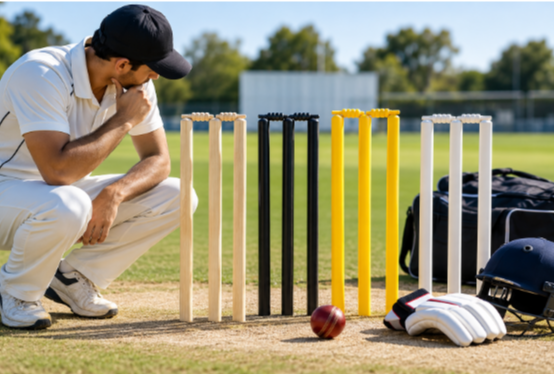
Cricket stumps are essential equipment for every match, whether played on professional grounds, school pitches, or neighborhood streets. Choosing suitable cricket stumps depends on the playing surface, match format, material quality, and frequency of use. The right set helps players maintain proper playing conditions while avoiding unnecessary equipment damage.
Different cricket formats require different equipment arrangements. Traditional wooden stumps are commonly used in organized matches, while portable alternatives are practical for recreational cricket. Understanding their construction and features makes it easier to select a suitable set.
Why Choosing the Right Cricket Stumps Matters
Cricket stumps form the wicket and play an important role in dismissals, including bowled, run-out, and stumped decisions. A standard wicket consists of three vertical stumps topped by two bails, forming a target for bowlers and fielders.
Traditional wooden stumps are commonly preferred for grass pitches and organized cricket. Their solid construction provides a conventional playing experience, although they require appropriate installation and maintenance.
Different Types of Cricket Stumps
Cricket stumps are available in several designs to accommodate different surfaces and playing requirements.
Traditional Wooden Stumps: Usually manufactured from durable wood, these are inserted directly into suitable ground surfaces. They are widely used during professional and club-level matches.
Springback Stumps: Designed with flexible spring-supported bases, these wickets can return upright after being struck. They are particularly convenient when playing on hard surfaces where traditional stumps cannot be inserted.
Plastic Stumps: Lightweight alternatives commonly used for recreational matches and introductory training. Their durability depends on material quality and playing conditions.
For players practicing on concrete or indoor surfaces, springback wickets offer convenient installation without requiring holes in the ground. Their portable construction also makes transportation and repeated practice setups easier.
Choosing Stumps for Different Playing Surfaces
The playing surface is one of the most important factors when selecting cricket wickets.
Grass Pitches
Traditional wooden stumps are generally suitable because they can be securely inserted into the ground.
Concrete and Hard Surfaces
Springback or stable freestanding wickets are often more practical because ground insertion is not possible.
Indoor Cricket
Lightweight portable designs may be suitable, provided they meet the facility’s safety requirements.
Street Cricket
Portable wickets are convenient for informal matches, particularly when players need quick setup and removal.
Understanding Cricket Stump Materials
Material quality affects durability, stability, and long-term performance.
Wooden stumps commonly use strong timber such as ashwood. Their construction should provide sufficient strength to withstand repeated ball impacts.
Plastic models are generally lighter and easier to transport, although some may be less resistant to powerful deliveries.
Springback designs incorporate flexible mechanisms and supporting bases. Players should inspect these components to ensure stable positioning.
Selecting suitable materials helps reduce unnecessary replacement and maintenance costs.
Correct Cricket Stump Size and Setup
Standard adult cricket wickets are 28 inches high and measure 9 inches across the combined width of the three stumps.
The stumps should be positioned upright, with the bails resting correctly in their grooves.
For official matches, equipment must comply with applicable cricket regulations.
Junior and recreational cricket may use alternative dimensions depending on age groups and competition requirements.
Before starting a match, players should confirm that the wickets are stable and correctly aligned at both ends of the pitch.
Common Mistakes When Selecting Cricket Stumps
Several mistakes can affect equipment performance and durability:
- Choosing unsuitable stumps for the playing surface.
- Ignoring material quality and construction.
- Using unstable portable wicket bases.
- Selecting incorrect dimensions for organized matches.
- Overlooking damaged bails or weakened stumps.
Checking equipment before use helps prevent unnecessary interruptions during practice and matches.
Frequently Asked Questions
1. What are cricket stumps made of?
Traditional stumps are commonly manufactured from strong wood, while recreational alternatives may use plastic or other durable materials.
2. Are springback wickets suitable for concrete pitches?
Yes. Springback wickets can be suitable for hard surfaces because they do not require ground insertion.
3. What is the standard height of cricket stumps?
Standard adult cricket stumps measure 28 inches in height.
4. Can wooden cricket stumps be used for practice?
Yes. Wooden stumps are suitable for training on appropriate surfaces where they can be installed securely.
5. How should cricket stumps be maintained?
Clean them after use, inspect for cracks or damage, and store them in a dry environment.
Conclusion
Choosing cricket stumps requires considering the playing format, surface type, material construction, and intended frequency of use. Wooden stumps are suitable for traditional cricket grounds, while springback and portable alternatives offer convenience for recreational formats.
Players should compare cricket wickets based on their stability, durability, dimensions, and installation requirements. Selecting appropriate equipment helps maintain reliable playing conditions during both practice sessions and competitive matches.
Read More: How to Choose the Right Cricket Kit Bag for Your Playing Level


